Buying your first recumbent? Measure your x-seam before you argue about frame size
choosing, fitting and riding recumbent cycles, including tadpole and delta trikes and two-wheel recumbents
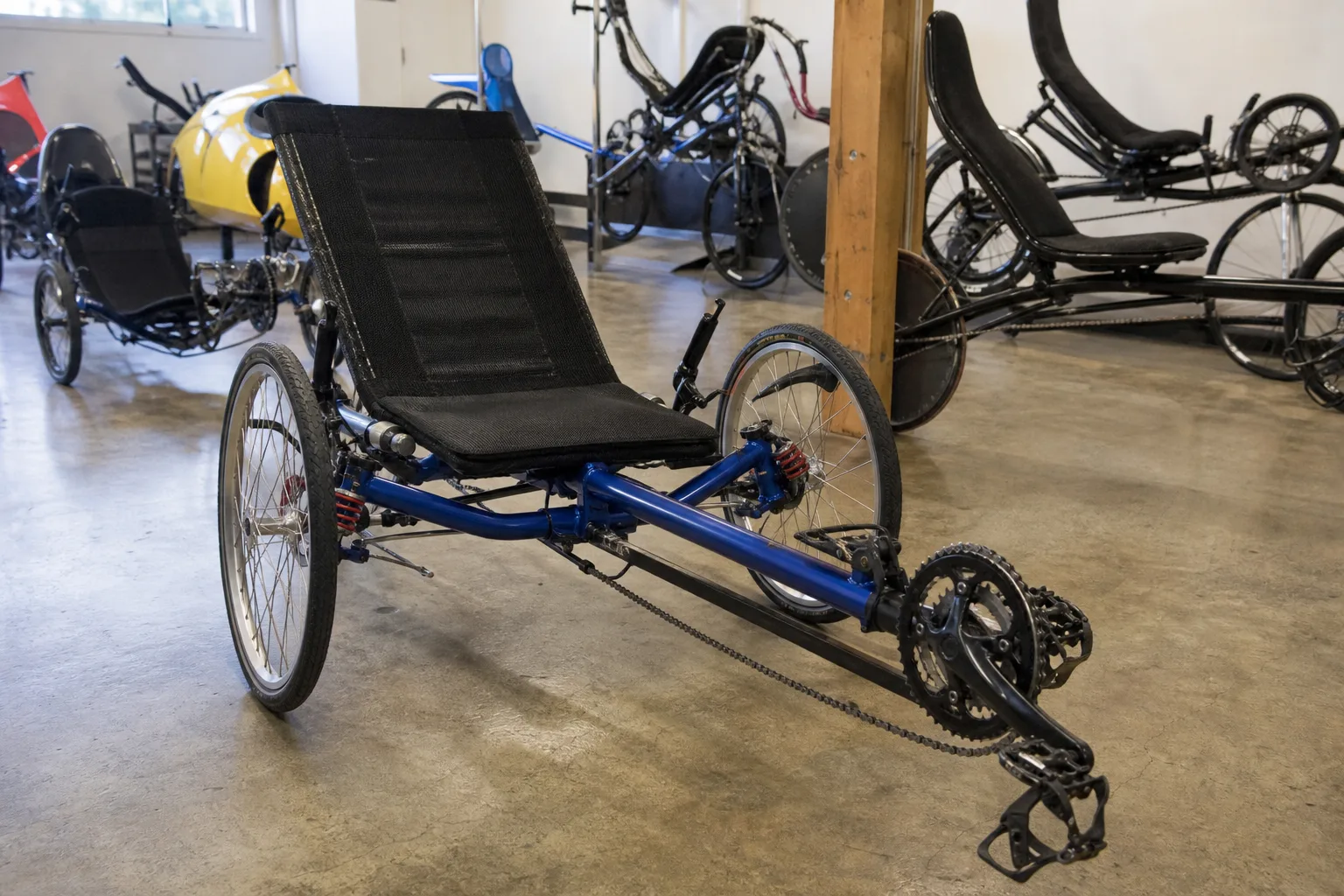
The number that decides whether a recumbent fits you is not your inseam, and it is not the frame size printed on the sticker. It is your x-seam, which is the distance from the base of your back, where your spine meets the seat, out to the sole of your foot with the leg extended and the knee left slightly soft. On an upright bicycle the frame carries your weight through a saddle and your legs hang down, so standover clearance and saddle height do most of the work. Lie the rider back and the whole geometry rotates. Nothing transfers.
Taking an x-seam that is worth trusting
Sit on the floor with your back flat against a wall, legs straight out, feet against a board or a heavy box, and measure from the wall to the board. Do it in the shoes you actually ride in, because a stiff sole with a thick heel can add most of an inch, and do it twice on separate days, since posture drifts. Most manufacturers publish an x-seam range for each frame, and the honest ones publish it per boom position rather than as one flattering span. If your number lands at the extreme end of a range, that machine will fit, but only barely, and every future adjustment runs one direction.
Seat recline, and the neck you have to live with
Recline is the angle of the seat back off vertical, and it trades comfort against sightlines. A seat near upright, in the region of forty-five degrees off the ground, lets you look down the road without lifting your head, keeps a mirror easy to use, and suits stop-and-go riding through town. Lay the seat back toward twenty-five or thirty degrees and the wind drag drops, the machine feels faster, and your neck now holds your head up against gravity for the whole ride. Riders who tolerate deep recline usually have a headrest set correctly, and they got there over months, not on the first afternoon.
Boom length is the adjustment you will actually make
The boom is the tube out front that carries the bottom bracket and cranks, and on most recumbents it slides in or out of the frame and clamps, with the chain lengthened or shortened to match. That single adjustment sets leg extension, so it does the job that saddle height does on a bicycle. Set it so the knee stays slightly bent at full extension, roughly the same softness you would want on an upright, and check that your heel does not lift at the far end of the stroke. Ask the shop how much boom travel is left after your fit, because a growing teenager, a second rider in the household, or a change of shoes all eat into it.
Recumbent butt and hot foot, described honestly
Recumbent butt is a dull ache or numbness low in the glutes that shows up after an hour or so, and it comes from pressure and from pedaling hard against a fixed back rather than from any saddle sore mechanism. It responds to small changes: a degree or two more recline, a thin pad moved slightly, a mesh seat retensioned, standing off the seat for a moment on a climb. Hot foot is burning or tingling across the ball of the foot, caused by the foot being loaded from below with no body weight lifting off it, and it usually clears with a wider shoe, a stiffer sole, or cleats moved back toward the arch. Both are fit problems with fit answers.
What a careful reader checks before paying
Ride the exact frame size, not a demo one size up with a promise that yours will feel similar, and ride it for at least half an hour, because ten minutes around a parking lot hides everything. Watch for heel strike on the front wheel at full lock, on tadpole trikes especially, where the two steered wheels sit ahead of you. Confirm the seat mounts have real range and are not already at the last hole. Look at whether you can see over your own knees at a stop sign. The Consumer Product Safety Commission is responsible for bicycle safety standards in this country, and reflectors and braking are part of that, but nobody regulates whether a machine fits your body.
Write your x-seam on a card, carry it to every showroom and every listing, and treat it the way a carpenter treats a stud finder: not the whole job, but the thing that keeps you from cutting into something expensive.