Riding at bumper height on roads built for upright cyclists, five things worth checking first
choosing, fitting and riding recumbent cycles, including tadpole and delta trikes and two-wheel recumbents
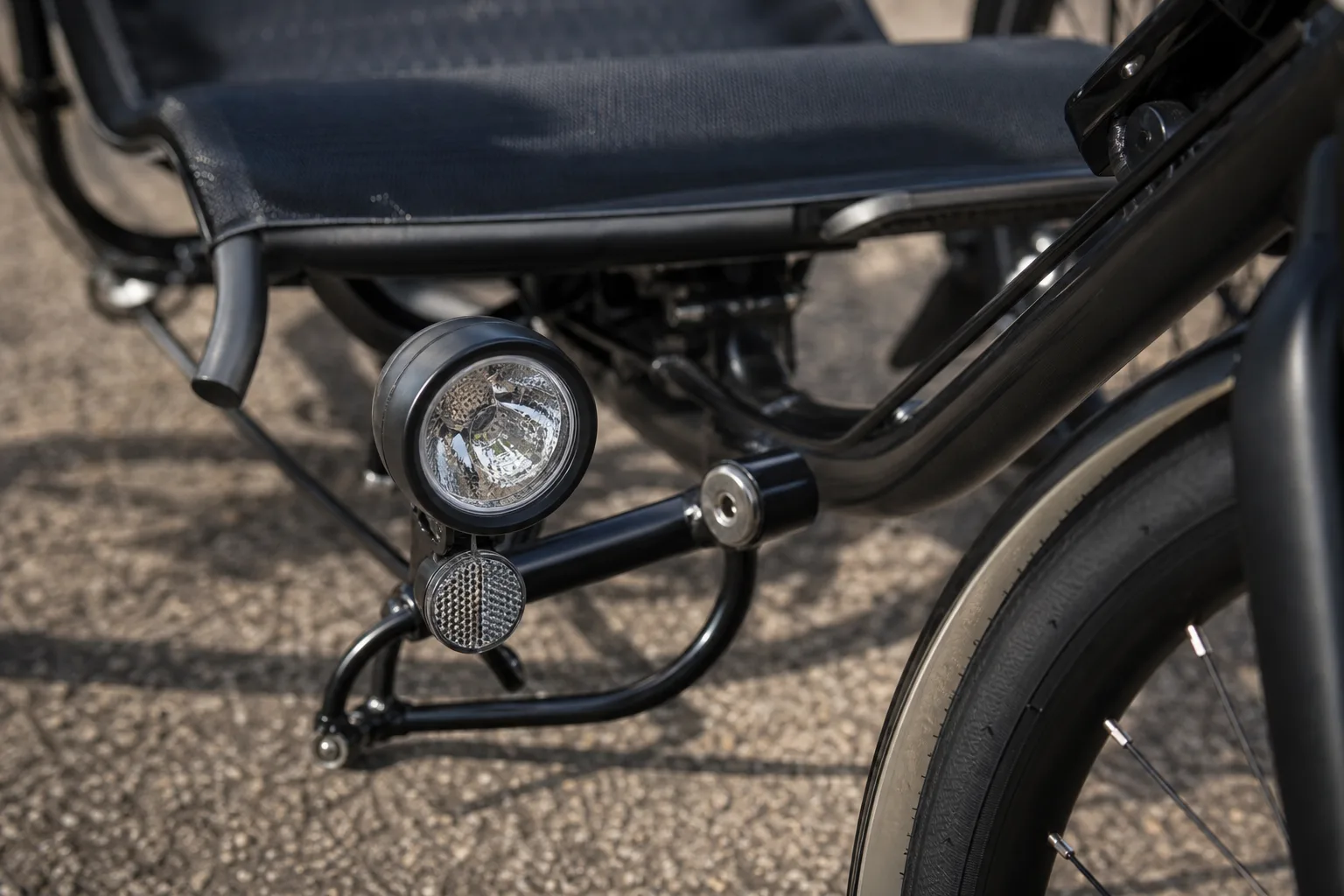
The seat height on a tadpole trike, the layout with two wheels at the front and one behind, usually puts the rider's eyes somewhere around the level of a sedan's door mirror, and lower than the hood of a pickup. That single fact shapes more of the ownership experience than gearing, weight, or the color of the frame. It changes what you can see, what sees you, how you approach an intersection, and where the machine can physically be stored and carried. Here are the checks a careful buyer runs before the money moves.
1. Measure the sight line from the seat, not from standing beside it
In a showroom the trike sits on flat concrete with nothing in front of it, which tells you almost nothing. Sit down, get your eyes at riding height, and look at what a parked car does to your view of the road beyond it. A row of parallel-parked vehicles becomes a wall, and the useful question is how far past the bumper line you have to roll before the cross street opens up. Riders who do this early tend to buy a slightly taller seat, or accept the trade and change how they approach blind corners. Both answers work. Guessing does not.
2. Understand what a flag does and where it fails
A mast flag, the orange pennant on a fiberglass whip, is genuinely useful in the situations it was designed for: parking lots, campus paths, slow suburban streets, and anywhere a driver is scanning at low speed. It puts a moving object above roof height where peripheral vision picks it up. What it does not do is help when a hedge, a fence, or a parked van sits between you and the driver, because the flag is behind the obstruction too. Check the mast mount before buying, since a socket welded to the frame survives loading and unloading far better than a plastic clamp on a rear stay.
3. Put light where a driver's eyes already are
Low seating means a headlight aimed straight ahead lands on a bumper rather than in a mirror. Riders solve this two ways, and the ones who are happiest do both: a bright forward light set slightly high on the boom or mast for the road surface, and a second light or reflector high on the flag mast where an approaching driver is already looking. Rear lighting deserves the same thinking, because a taillight mounted at seat level sits below the sight line of anyone in a tall vehicle. The Consumer Product Safety Commission is responsible for the federal rules covering bicycle reflectors, and reflective material on the mast, the wheels, and the back of the seat costs very little.
4. Change how you arrive at driveways and intersections
The habit worth building is arriving square and stopping earlier than an upright rider would, then rolling forward in a deliberate second movement once you can see. On a trike this is cheap, because you can stop without unclipping, put both hands on the bars, and hold position on a slope with a parking brake. Driveways with hedges, gas station aprons, and the exits from strip malls are where low riders report the most near misses, and every one of them is a visibility problem rather than a speed problem. Riders who plan routes around fewer of those exits enjoy the machine more.
5. Let the garage door and the trunk decide the route map
A trike that will not fit through the side door of a garage lives outside, and a trike that lives outside gets ridden less. Measure the door opening, the turn into the garage, and the space beside the car before you commit. Then measure the vehicle: folded and with the seat off, many tadpoles go into a mid-size SUV with the rear seats down, while a fixed-frame delta trike, the layout with one wheel forward and two behind, often needs a hitch rack or a small trailer. That decision quietly determines whether you ride only from your own driveway or from any trailhead within an hour.
Most of these checks take an afternoon, a tape measure, and one honest look down a street with cars parked along it. The riders who do them end up with a machine that fits the roads they actually have, and the low seat stops being a compromise and becomes just the way they sit.